November 5, 2026
Download:
An Open Letter to the 120th Congress
Dear Members of the 120th Congress,
As we move forward from this week’s elections, across party lines, Americans want a government that works and leadership that makes a difference in their daily lives. Broadband connectivity is essential to delivering on that mandate.
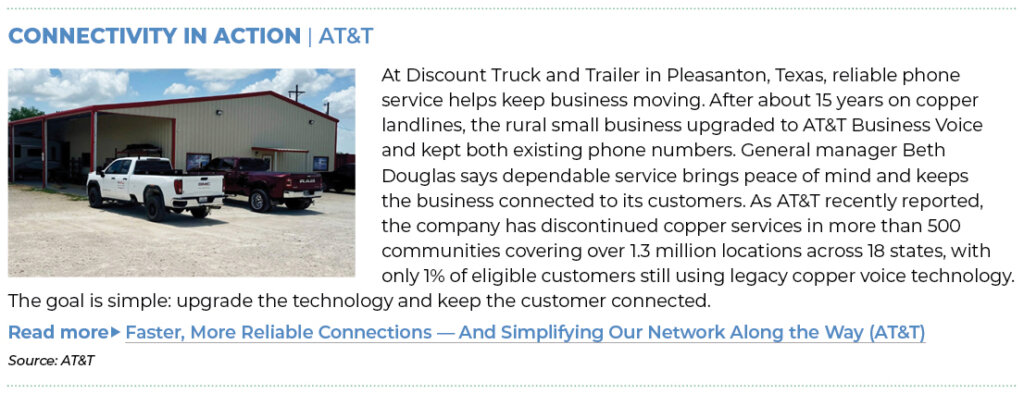
A future-proof fiber broadband connection helps a small business reach customers, a student learn and a patient get care. It keeps families connected and puts opportunity within reach, and ensures our communities and our nation can compete and lead in the global innovation economy. America’s broadband providers are investing in those connections every day, with $2.3 trillion invested in communications infrastructure since 1996 and $92.6 billion invested in 2025 alone.
As you prepare to begin a new Congress, three key principles should drive your commonsense agenda for our broadband future: will it help more Americans get connected, keep service affordable and protect the networks they rely on?
USTelecom’s broadband blueprint keeps those questions front and center and offers practical ways for Congress to deliver results.
Principle 1: Build without barriers
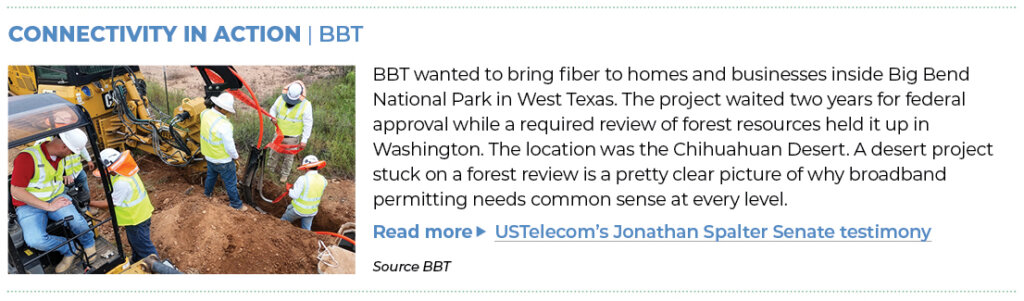
Every permitting delay leaves a community waiting for better connectivity. The FCC is doing important work to clear red tape at the state and local level so providers can connect more people. Congress should stand squarely behind continued progress.
Ways Congress can lead:
- Include broadband in any federal permitting reform efforts. As Congress continues to explore ways to remove government barriers to needed infrastructure projects in their districts, it must recognize the primacy of broadband, alongside roads, energy and other traditional infrastructure. Any reforms should advance clear deadlines, reasonable fees and streamlined approvals so construction crews can build and more communities can get connected. Remember that accelerated permitting means connecting more communities – rural hospitals, schools, small businesses, homes – with fast, reliable fiber internet.
Principle 2: Keep every community connected to fast, affordable broadband
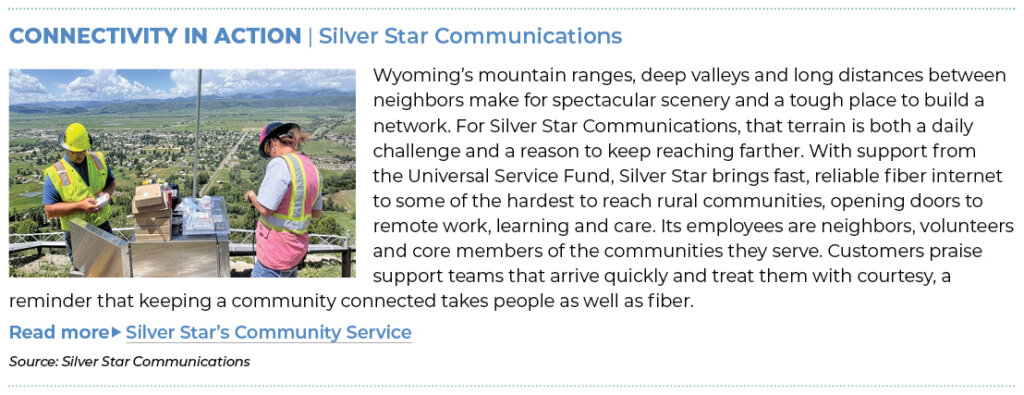
Broadband is an affordability success story in an economy where household costs keep climbing: USTelecom’s Broadband Pricing Index shows inflation-adjusted prices for the most popular plans fell 43.6% since 2014, while download speeds rose 145%. Intense market competition and private investment are driving that value, while targeted support helps sustain service in rural areas where the economics are toughest. Congress should double-down on what is working, a highly successful model of competition and consumer choice, and modernize universal service to address the challenging economics in rural communities.
Ways Congress can lead:
- Protect the policies delivering greater affordability. Promote competition and private investment, preserve targeted rural support and avoid regulations that discourage network upgrades, limit consumer choice and drive up consumer broadband bills.
- Modernize USF funding. Build on the important work of the congressional USF working group by expanding the contribution base to include contributions from large technology companies that benefit from broadband networks. Reinforce the legal foundation for USF administration to keep rural communities connected.
- Protect critical communications infrastructure. Pass legislation to stiffen penalties against criminals who steal and vandalize our nation’s critical communications infrastructure.
- Invest in lasting rural connectivity. Preserve predictable support for maintaining and upgrading rural networks. Prioritize fiber in government-funded deployments wherever feasible, recognizing its capacity, reliability and ability to meet growing demand, and keep oversight efficient so resources go toward connecting communities.
Principle 3: Protect what connects us
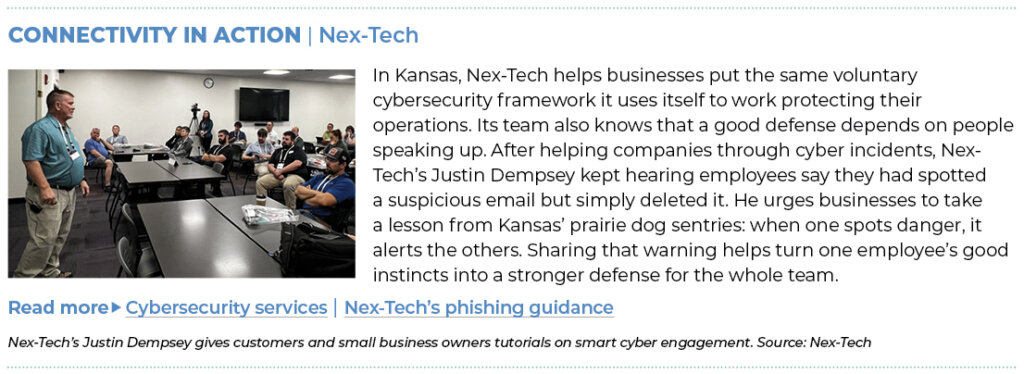
Protecting our networks and customers takes cooperation among providers, government and the industries scammers and hackers exploit. Congressional leadership can strengthen those partnerships and give defenders the legal certainty and flexibility to keep pace with changing threats.
Ways Congress can lead:
- Pass a long-term reauthorization of CISA 2015. If the law’s protections expire on December 11, or receive only a short-term extension, the new Congress should move promptly to provide long-term certainty for voluntary cyber threat sharing between industry and government.
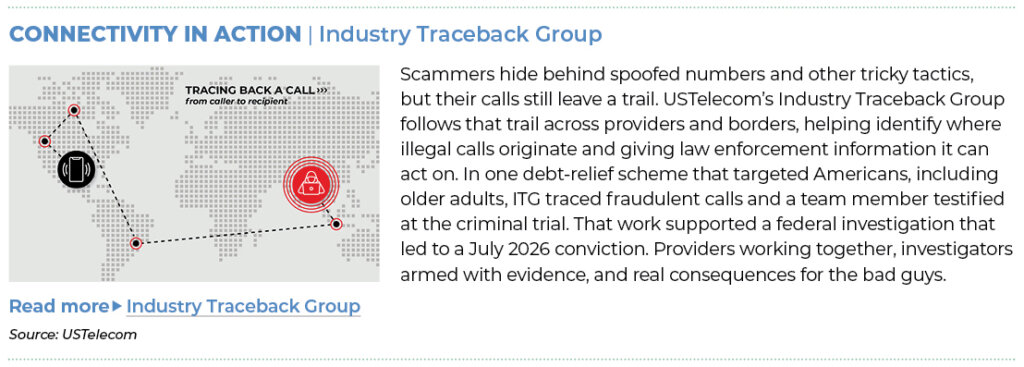
- Crack down on scam networks and hold criminals accountable. Prioritize criminal investigations and prosecutions of scam operations and strengthen laws and enforcement tools to disrupt the illicit technologies and infrastructure built specifically to carry out scams. Support industry-law enforcement partnerships, including USTelecom’s Industry Traceback Group’s work tracing illegal robocalls, scam calls, and scam texts to their source. The ITG is on the frontlines of the fight against scammers, working shoulder to shoulder with law enforcement, and serves as an expert resource for congressional discussions about scams and illegal robocalls.
- Keep cyber defense adaptable. Advance flexible, risk-based policies that support voluntary cyber threat sharing and collaboration. Avoid regulations that bury cyber defenders in checklists and paperwork and take time away from protecting our networks.
A new Congress and a practical test
Americans will judge progress by what changes in their lives. More reliable connections, better value and safer networks are results worth working toward together.
We look forward to working with you to turn these principles into progress for the communities we all serve.

Jonathan Spalter
President & CEO
USTelecom – The Broadband Association